About the client
Arvo is a Canadian-built online marketplace designed to connect consumers directly with local farmers, ranchers, bakers, and makers. Rooted in Alberta’s agricultural community, Arvo makes it easier to discover and support local food while giving producers a simple, centralized platform to sell their products with transparency and care
ROLE
Design Lead at Punchcard
CONTRIBUTOR CREDITS
Zoe Park (Research)
PLATFORMS
Web app
TECH USED
Figma
scroll down
Project overview

The Arvo project focused on designing and launching an early-stage marketplace that brings together local food producers and consumers in a single, cohesive experience. The challenge was to translate a community-first vision into a functional product, balancing ease of use, trust, and transparency while supporting both sides of the marketplace. Our work included shaping the product structure, designing key user flows, and delivering a launch-ready platform
Project overview
The Arvo project focused on designing and launching an early-stage marketplace that brings together local food producers and consumers in a single, cohesive experience. The challenge was to translate a community-first vision into a functional product, balancing ease of use, trust, and transparency while supporting both sides of the marketplace. Our work included shaping the product structure, designing key user flows, and delivering a launch-ready platform
Problem Statement
Across Alberta’s urban centers, consumers want convenient access to trustworthy, locally and ethically produced food, but struggle to find direct channels to buy from farms. At the same time, small and mid-sized producers lack the infrastructure, marketing, and logistics needed to reach urban buyers at scale. Despite strong interest on both sides, friction in discovery, communication, and fulfillment limits consistent transactions and creates a missed opportunity for consumers and producers alike
Problem Statement
Across Alberta’s urban centers, consumers want convenient access to trustworthy, locally and ethically produced food, but struggle to find direct channels to buy from farms. At the same time, small and mid-sized producers lack the infrastructure, marketing, and logistics needed to reach urban buyers at scale. Despite strong interest on both sides, friction in discovery, communication, and fulfillment limits consistent transactions and creates a missed opportunity for consumers and producers alike
Proposed Solution
Pasture to Plate is a digital marketplace connecting values-driven consumers with local food producers across Alberta. It gives consumers convenient access to trusted, ethically produced local food, while providing producers with a streamlined way to sell, distribute, and build direct customer relationships. By reducing friction on both sides, Pasture to Plate strengthens the local food ecosystem for both producers and consumers
Problem Statement
As a radio listener, I am trying to discover new music and artists, but I can only listen to certain content on CKUA radio because the programme segments are available live only at a specific time. This makes me feel left-out and not in control.
Mockups
For this project, the client had brand guidelines that were used to guide the look and feel. New patterns and UI components were created to match these guidelines.
Mockups
For this project, the client had brand guidelines that were used to guide the look and feel. New patterns and UI components were created to match these guidelines.
Home page
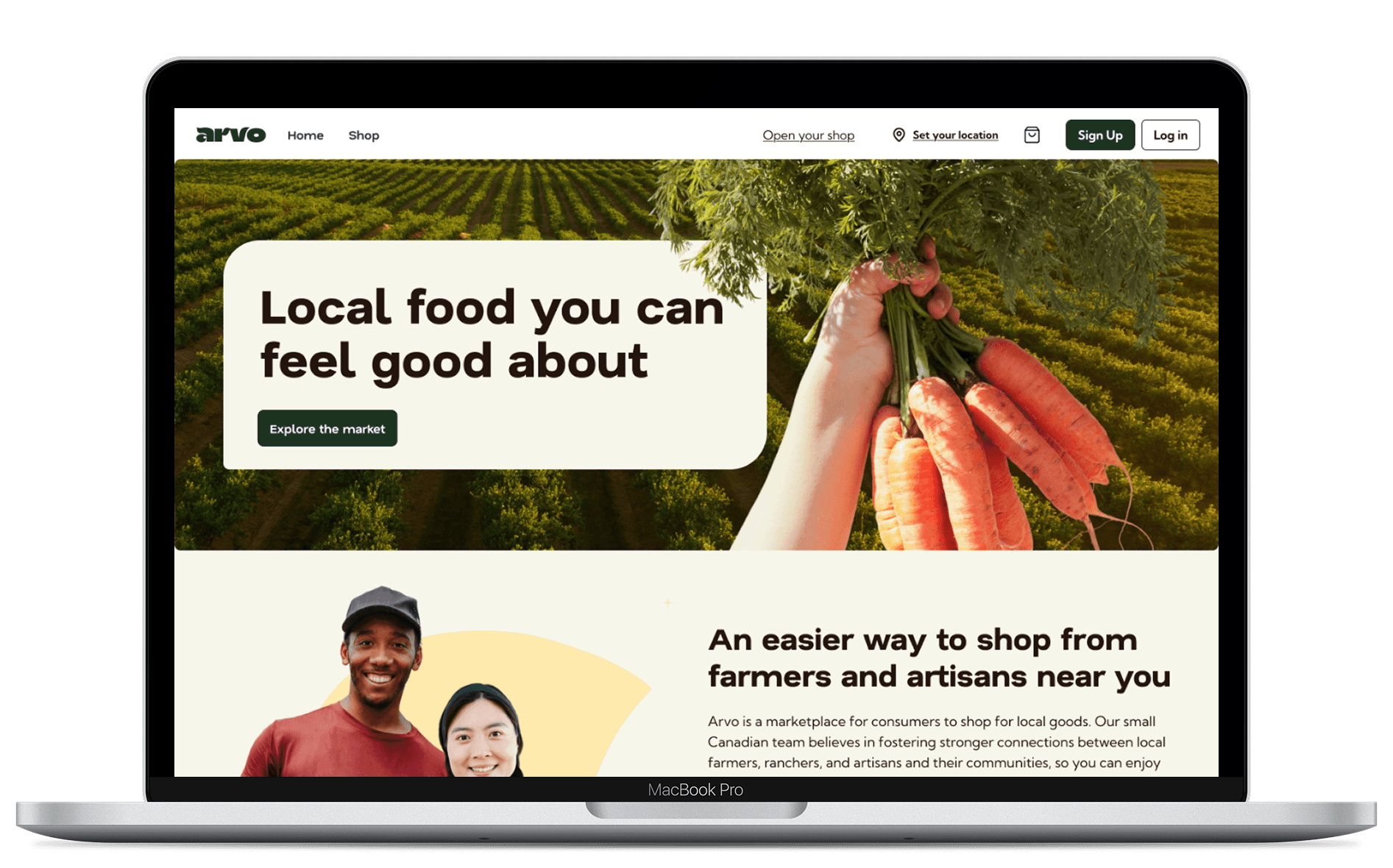
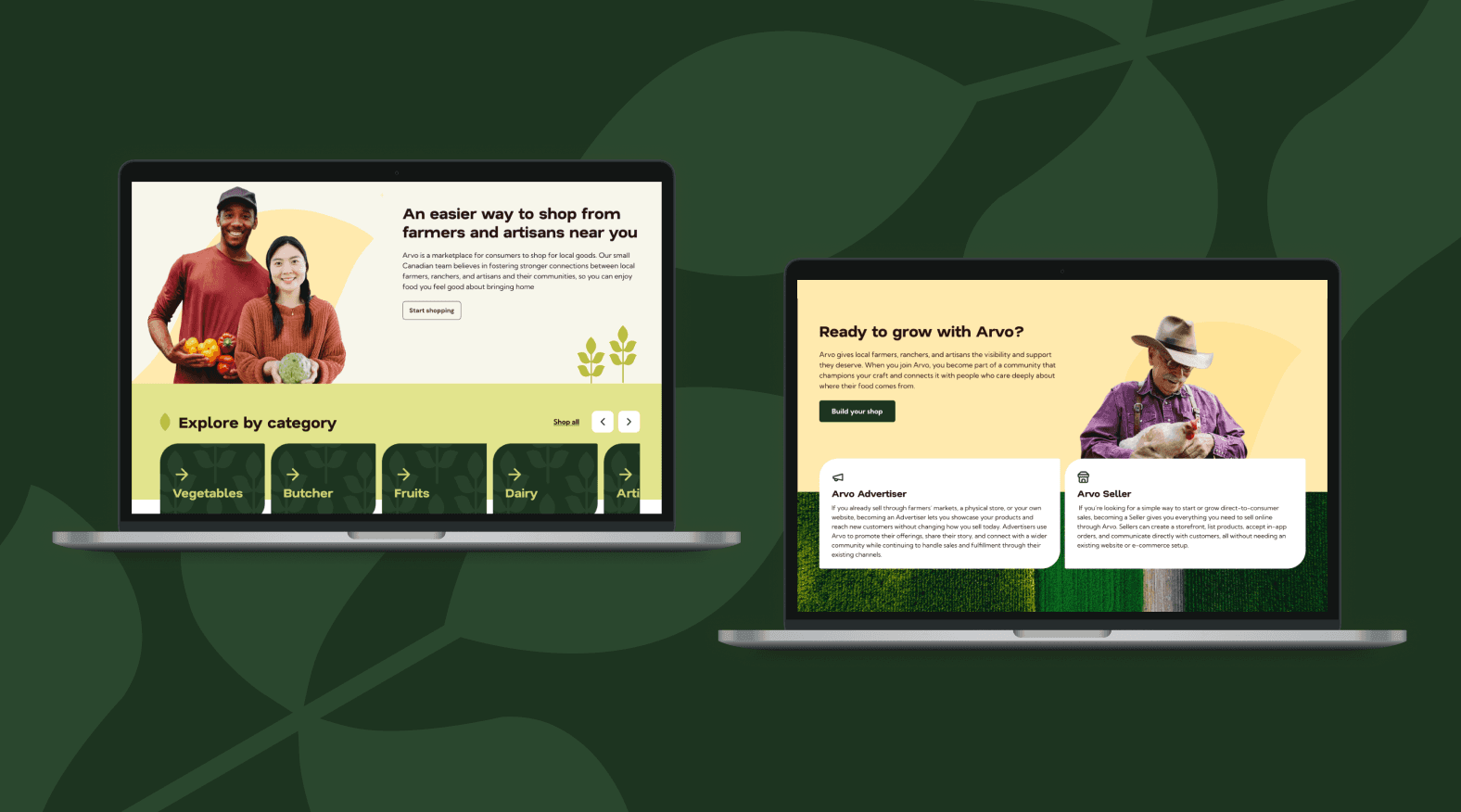
The home page was designed to educate users on the purpose of the site and was aimed mainly to consumers in order to guide them to where they needed to go. A few producer sections were also added to garner producer sign-ups
Home page
The home page was designed to educate users on the purpose of the site and was aimed mainly to consumers in order to guide them to where they needed to go. A few producer sections were also added to garner producer sign-ups
An easy way to search
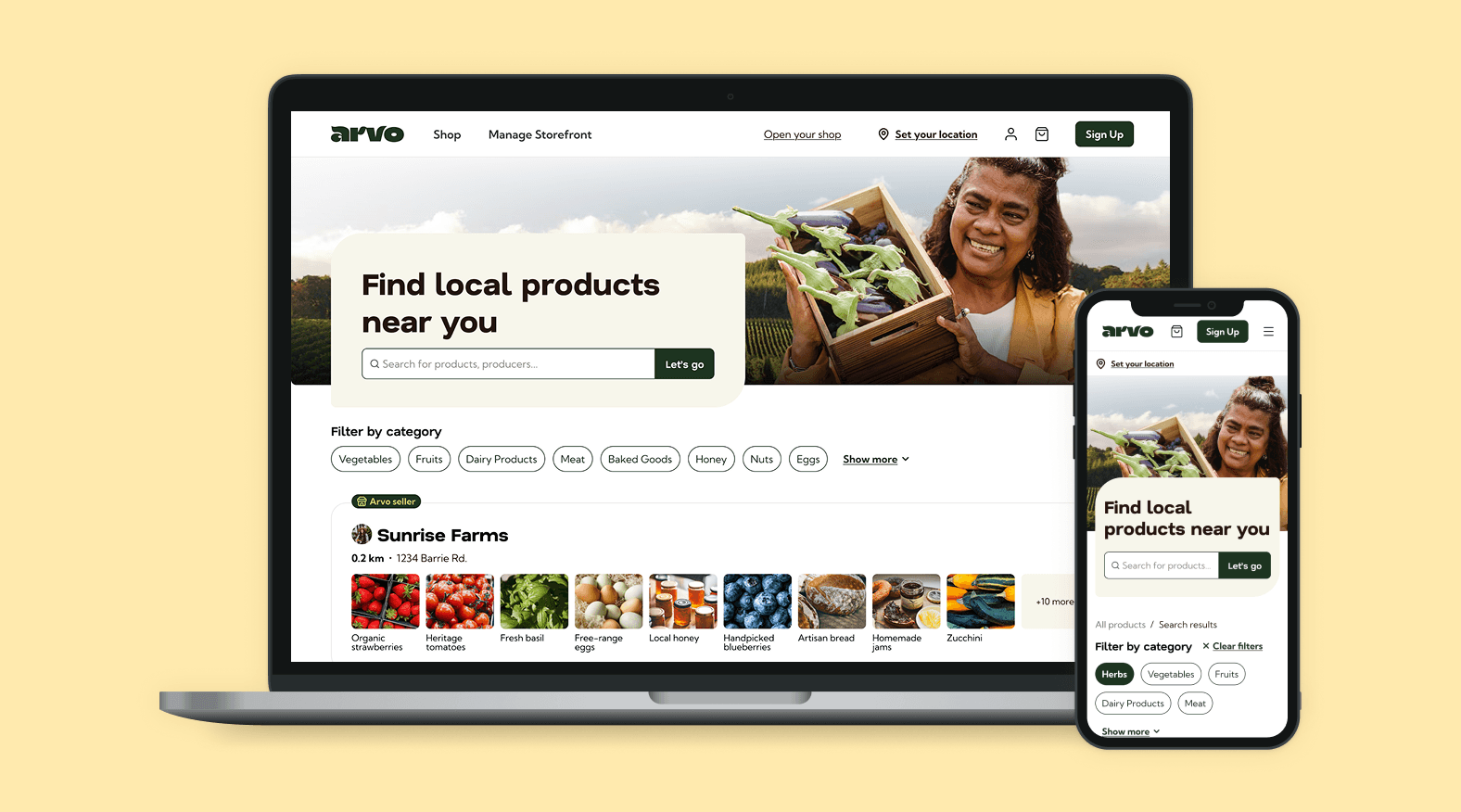
On of the features of the app was allowing users to be able to search for producers or products. This screen allowed users to at a glance see what producers exist as well as a preview of some products that they were selling
An easy way to search
On of the features of the app was allowing users to be able to search for producers or products. This screen allowed users to at a glance see what producers exist as well as a preview of some products that they were selling
Searching via map
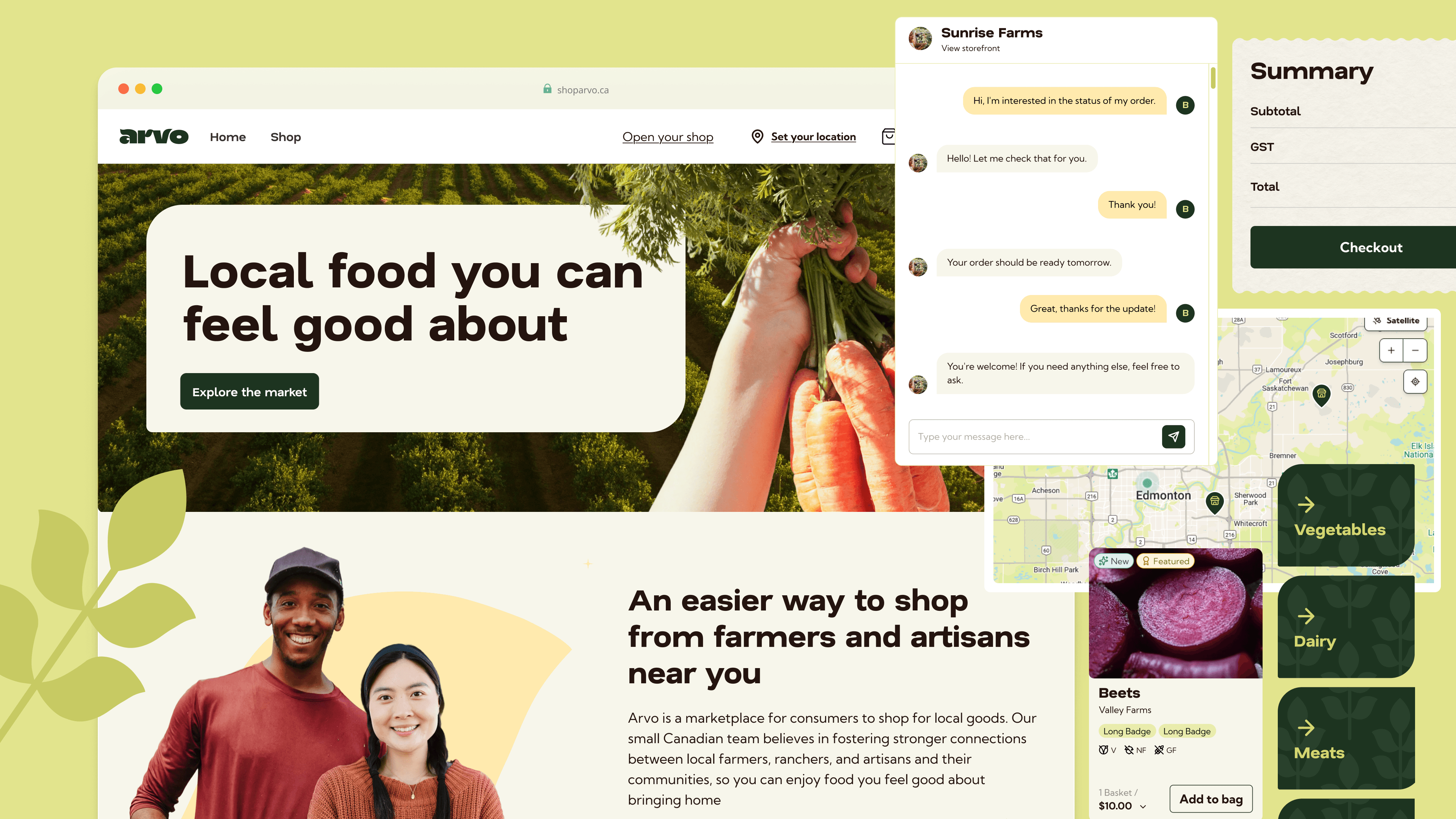
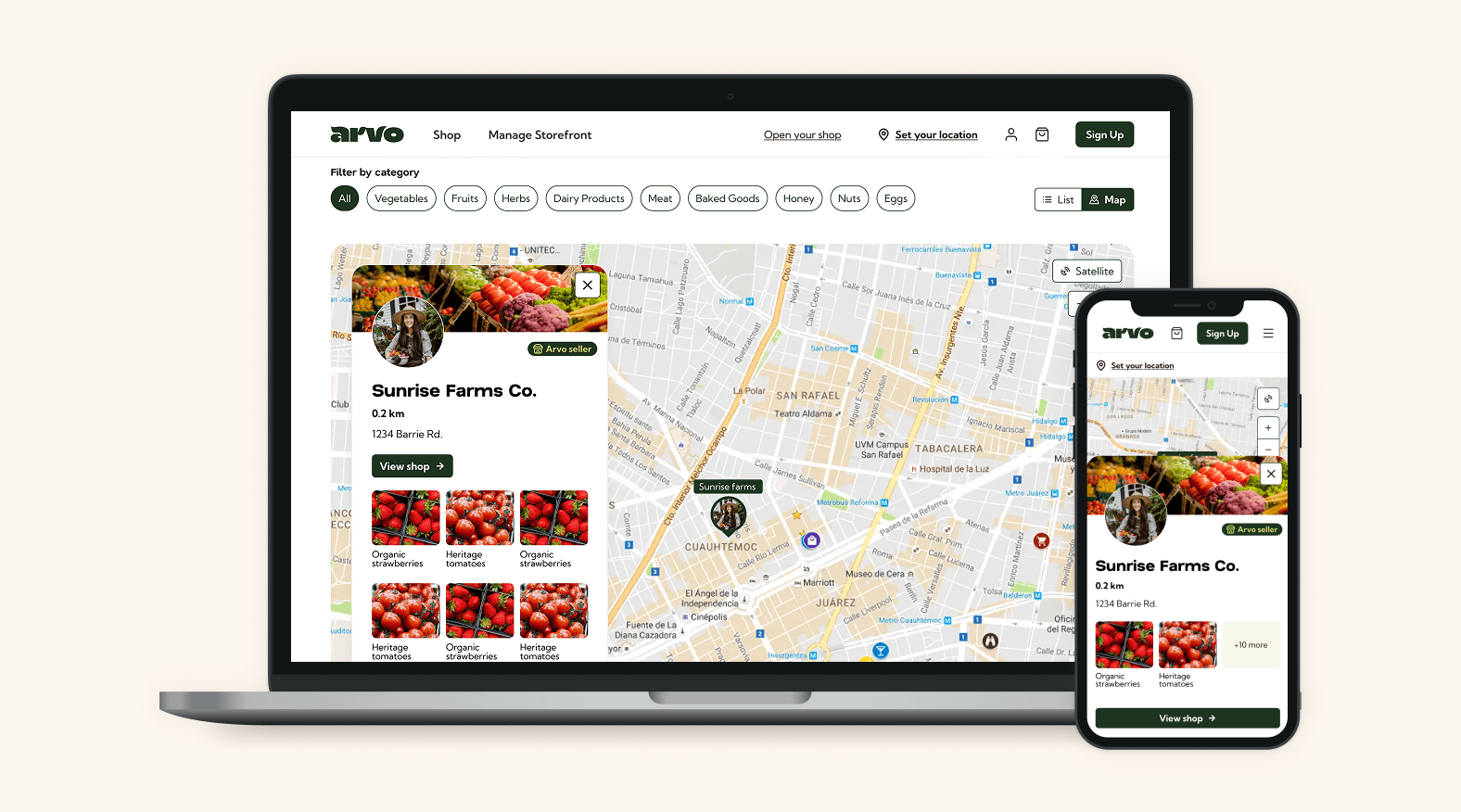
Because there are producers in different locations, a map feature was created in order for the user to see where the pin locations were and to find producers in their area. The user also had an ability to set their location to see the distance from the producers
Searching via map
Because there are producers in different locations, a map feature was created in order for the user to see where the pin locations were and to find producers in their area. The user also had an ability to set their location to see the distance from the producers
Product details
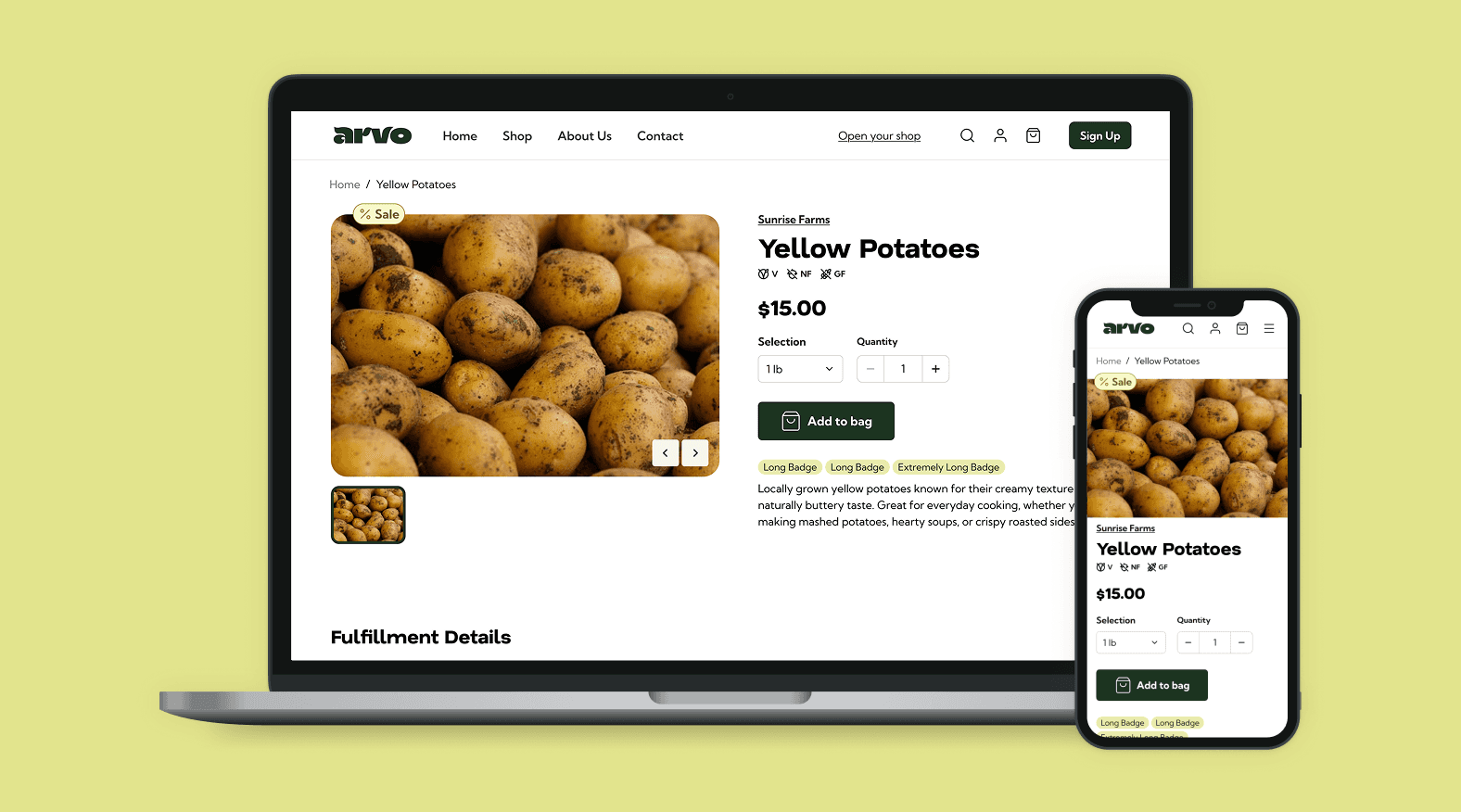
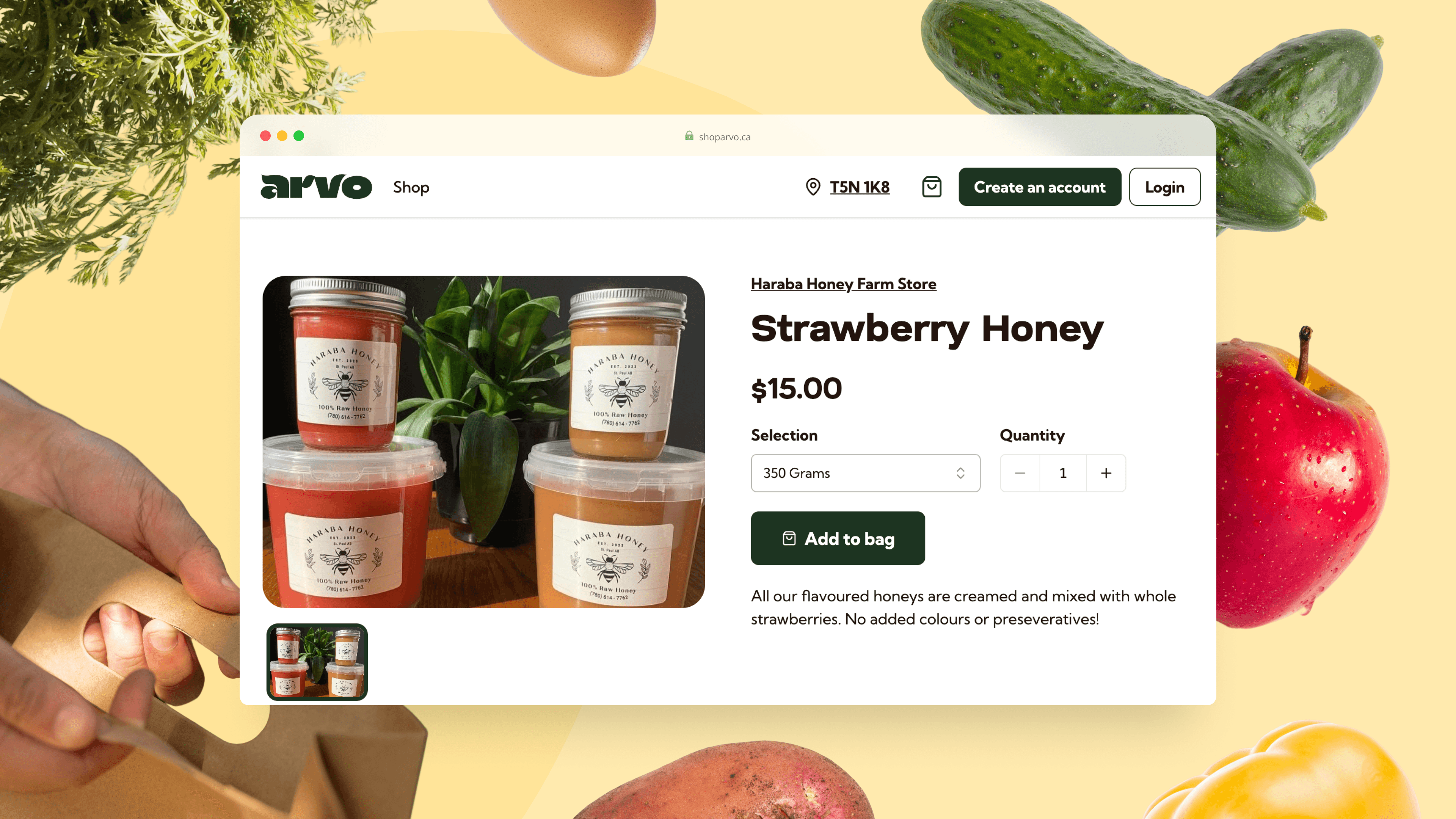
The product details screen was designed to be intuitive, and align with common e-commerce patterns. The user is able to select variants, view images, and add the product to their bag
Product details
The product details screen was designed to be intuitive, and align with common e-commerce patterns. The user is able to select variants, view images, and add the product to their bag
Product cards
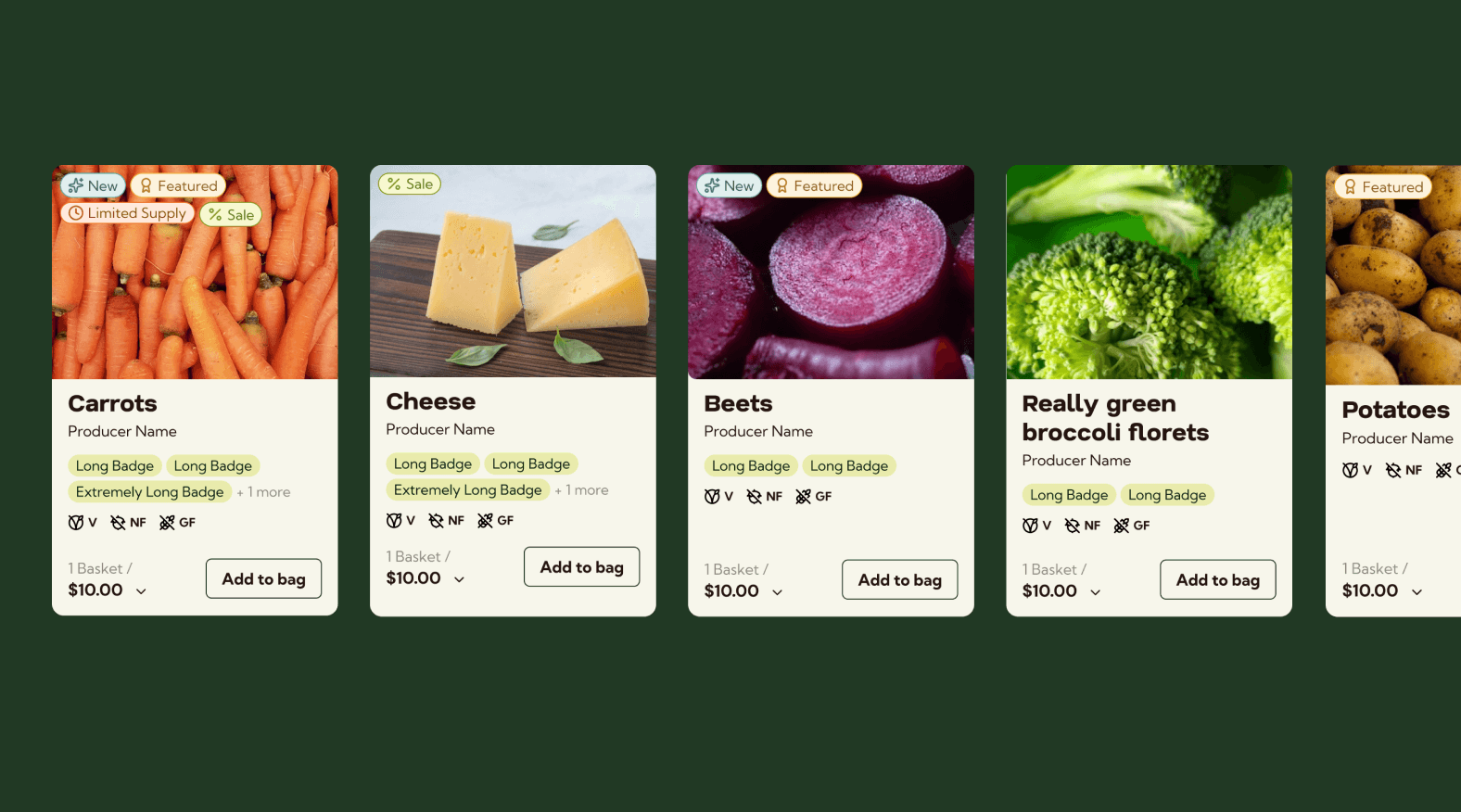
The product cards were designed to house numerous types of information such as: product name, producer name, promotional tags, dietary tags, product tags, and variants. The need to cleanly organize this information and establish good heirarchy was essential
Product cards
The product cards were designed to house numerous types of information such as: product name, producer name, promotional tags, dietary tags, product tags, and variants. The need to cleanly organize this information and establish good heirarchy was essential
In-app messaging
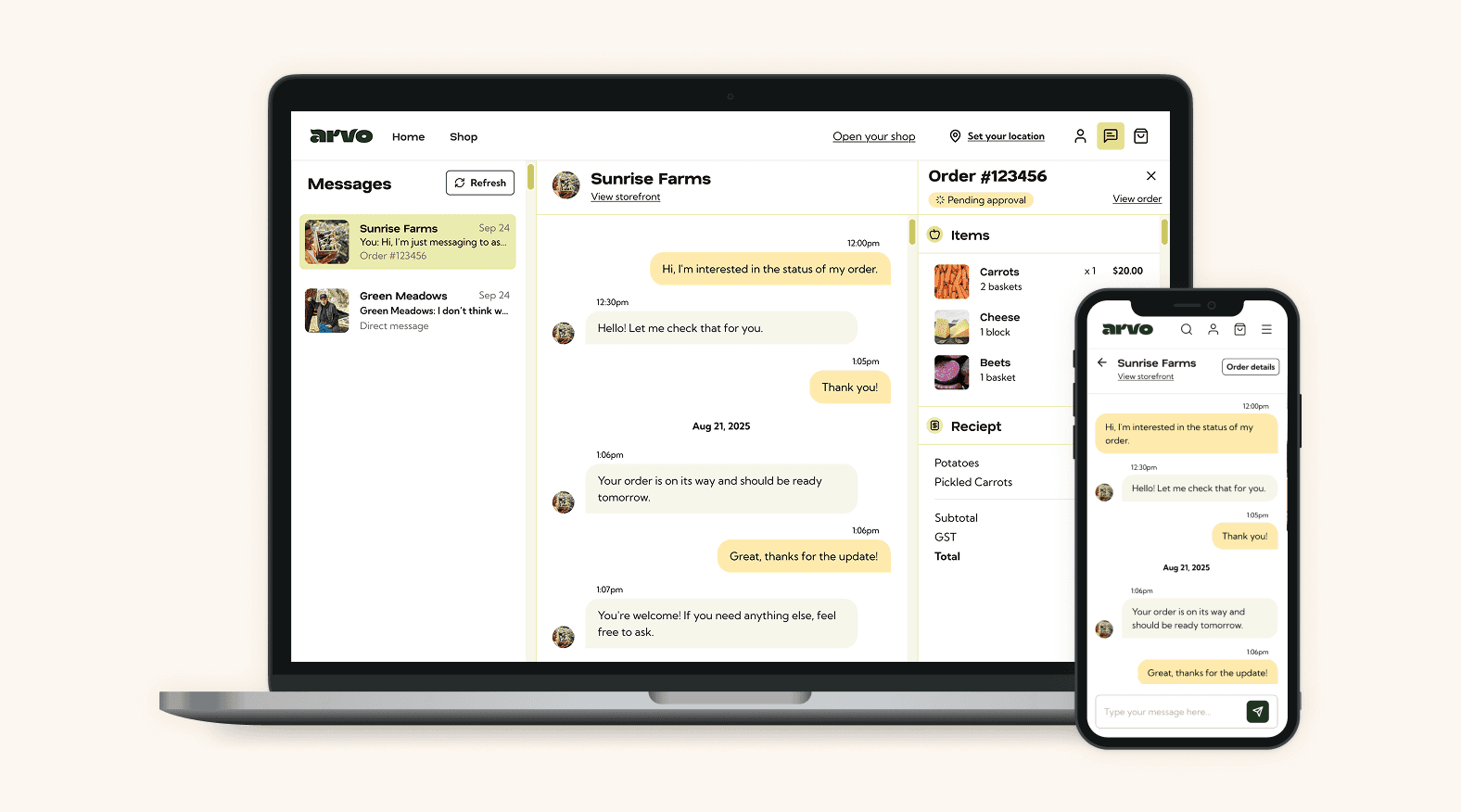
Another feature in the app was the ability for consumers and producers to message each other both generally and in relation to specific orders. Each of those scenerios came with different requirements and were designed based on user needs
In-app messaging
Another feature in the app was the ability for consumers and producers to message each other both generally and in relation to specific orders. Each of those scenerios came with different requirements and were designed based on user needs
Producer storefront setup
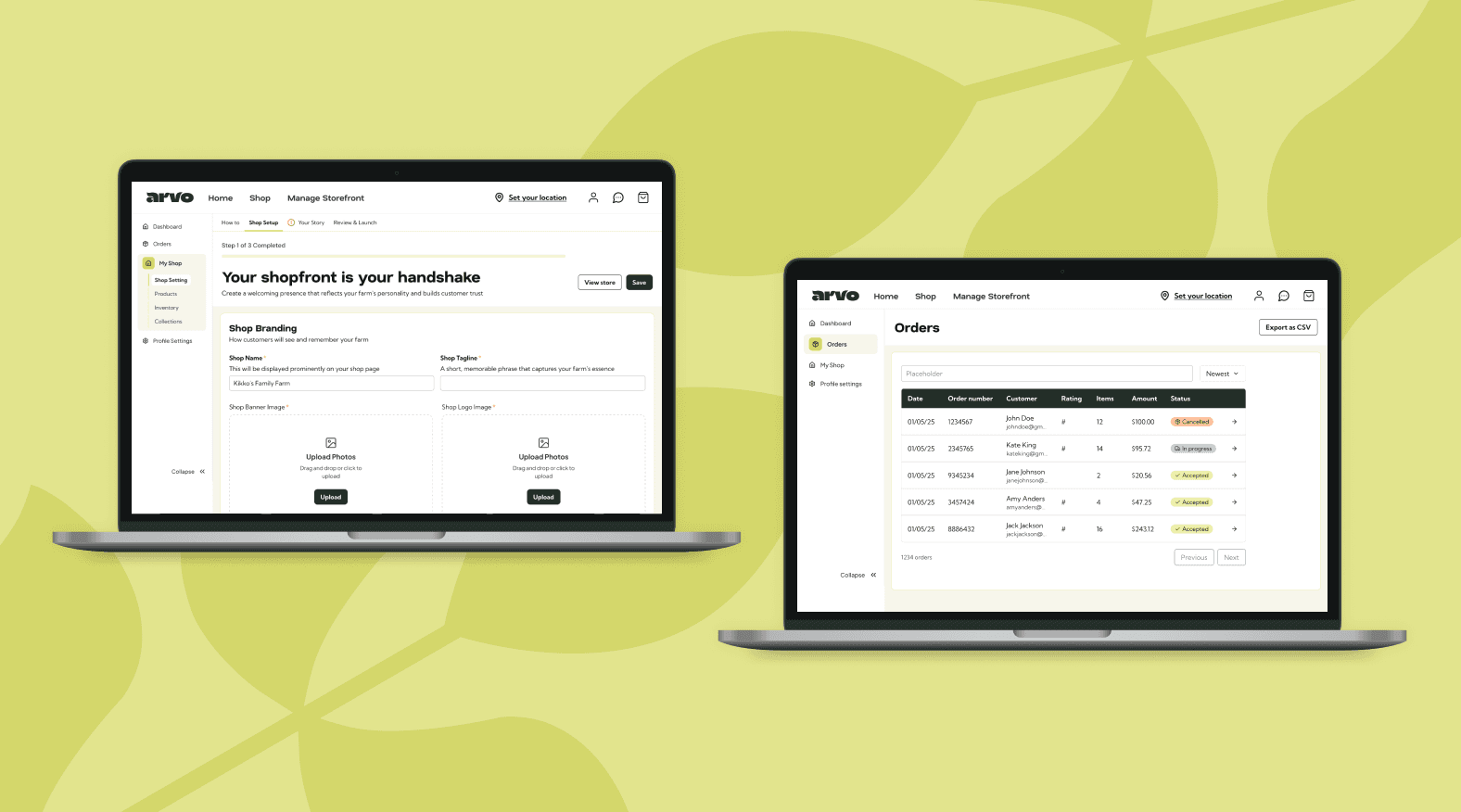
Because ARVO is a marketplace for various producers, a flow was buillt to guide the producers through the storefront setup process. These screens were designed to be frinctionless and allow the producers to quickly and easily set up their storefront so that they could get their products in front of consumers
Producer storefront setup
Because ARVO is a marketplace for various producers, a flow was buillt to guide the producers through the storefront setup process. These screens were designed to be frinctionless and allow the producers to quickly and easily set up their storefront so that they could get their products in front of consumers
Final thoughts
We delivered a robust first iteration of an online farmers market that benefits both local farmers and local consumers. Through some light initial user testing we were able to refine some of our decisions and it will be exciting to see how users continue to use the product as further iterations are made and nice-to-have features are eventually built in
Final thoughts
We delivered a robust first iteration of an online farmers market that benefits both local farmers and local consumers. Through some light initial user testing we were able to refine some of our decisions and it will be exciting to see how users continue to use the product as further iterations are made and nice-to-have features are eventually built in
Project overview
The Arvo project focused on designing and launching an early-stage marketplace that brings together local food producers and consumers in a single, cohesive experience. The challenge was to translate a community-first vision into a functional product, balancing ease of use, trust, and transparency while supporting both sides of the marketplace. Our work included shaping the product structure, designing key user flows, and delivering a launch-ready platform
Problem Statement
Across Alberta’s urban centers, consumers want convenient access to trustworthy, locally and ethically produced food, but struggle to find direct channels to buy from farms. At the same time, small and mid-sized producers lack the infrastructure, marketing, and logistics needed to reach urban buyers at scale. Despite strong interest on both sides, friction in discovery, communication, and fulfillment limits consistent transactions and creates a missed opportunity for consumers and producers alike
Proposed Solution
Pasture to Plate is a digital marketplace connecting values-driven consumers with local food producers across Alberta. It gives consumers convenient access to trusted, ethically produced local food, while providing producers with a streamlined way to sell, distribute, and build direct customer relationships. By reducing friction on both sides, Pasture to Plate strengthens the local food ecosystem for both producers and consumers
Problem Statement
As a radio listener, I am trying to discover new music and artists, but I can only listen to certain content on CKUA radio because the programme segments are available live only at a specific time. This makes me feel left-out and not in control.
Mockups
For this project, the client had brand guidelines that were used to guide the look and feel. New patterns and UI components were created to match these guidelines.
Home page
The home page was designed to educate users on the purpose of the site and was aimed mainly to consumers in order to guide them to where they needed to go. A few producer sections were also added to garner producer sign-ups
An easy way to search
On of the features of the app was allowing users to be able to search for producers or products. This screen allowed users to at a glance see what producers exist as well as a preview of some products that they were selling
Searching via map
Because there are producers in different locations, a map feature was created in order for the user to see where the pin locations were and to find producers in their area. The user also had an ability to set their location to see the distance from the producers
Product details
The product details screen was designed to be intuitive, and align with common e-commerce patterns. The user is able to select variants, view images, and add the product to their bag
Product cards
The product cards were designed to house numerous types of information such as: product name, producer name, promotional tags, dietary tags, product tags, and variants. The need to cleanly organize this information and establish good heirarchy was essential
In-app messaging
Another feature in the app was the ability for consumers and producers to message each other both generally and in relation to specific orders. Each of those scenerios came with different requirements and were designed based on user needs
Producer storefront setup
Because ARVO is a marketplace for various producers, a flow was buillt to guide the producers through the storefront setup process. These screens were designed to be frinctionless and allow the producers to quickly and easily set up their storefront so that they could get their products in front of consumers
Final thoughts
We delivered a robust first iteration of an online farmers market that benefits both local farmers and local consumers. Through some light initial user testing we were able to refine some of our decisions and it will be exciting to see how users continue to use the product as further iterations are made and nice-to-have features are eventually built in